
7 Gentle Fertility Yoga Poses to Try at Home to Support Your Journey


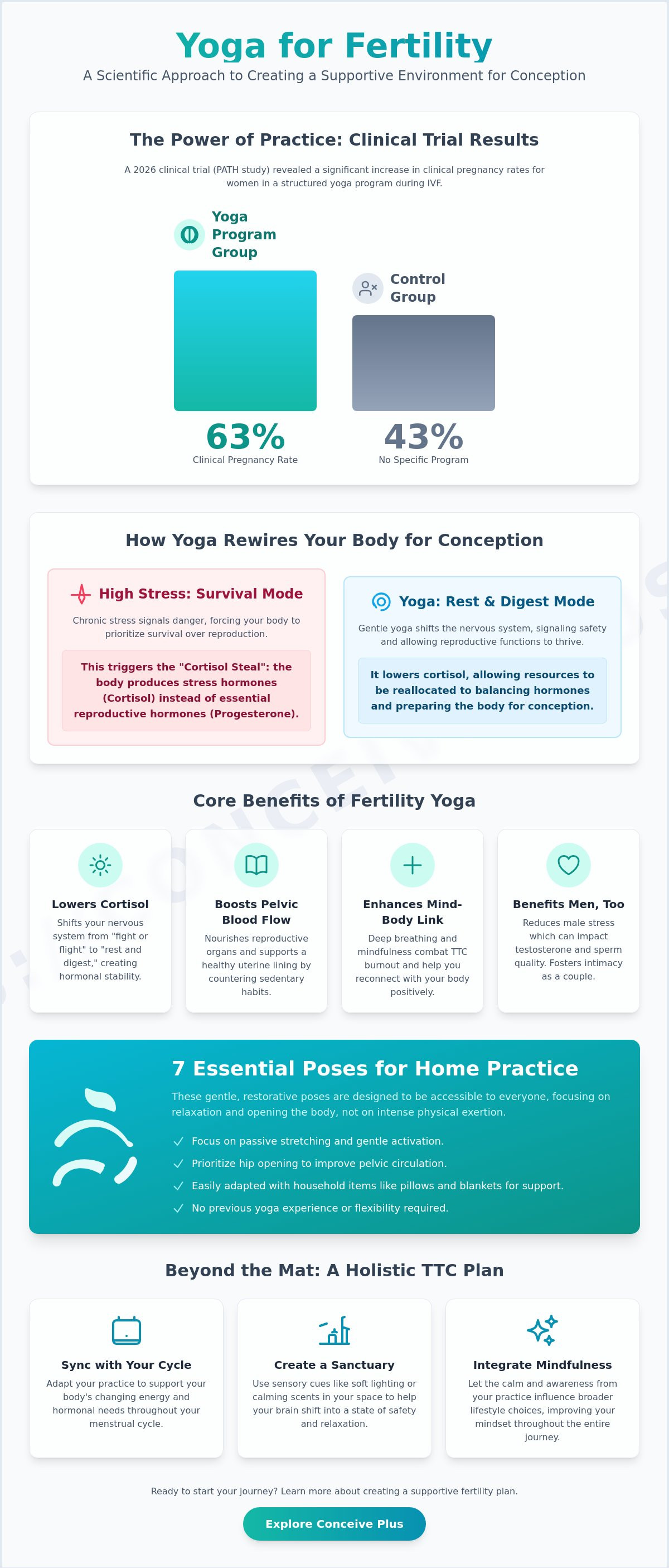
A 2026 clinical trial known as the PATH study found that women practicing a structured yoga program achieved a 63 percent clinical pregnancy rate during IVF, compared to just 43 percent in the control group. This data highlights a powerful truth: your physical state directly impacts your reproductive environment. If you are struggling with the high cortisol levels that come with the stress of trying to conceive, you aren't alone. It is common to feel disconnected from your body or worried about poor pelvic circulation after long days of sedentary work. You want a way to reclaim your sense of calm and support your body's natural rhythms without adding more "to-dos" to your schedule.
The good news is that you can start shifting your nervous system from survival mode to reproduction mode using specific fertility yoga poses to try at home. These gentle movements are designed to reduce anxiety, improve blood flow to reproductive organs, and foster a deeper mind-body connection. In this guide, we will walk you through seven restorative poses that create a supportive environment for conception. You will learn a simple, repeatable routine that fits into your daily life and helps you feel more grounded throughout your journey.
Key Takeaways
- Understand the biological link between stress reduction and reproductive health, specifically how to prevent high cortisol from diverting resources away from your hormones.
- Master a curated list of seven gentle fertility yoga poses to try at home that prioritize pelvic circulation and restorative relaxation.
- Learn to synchronize your movements with your menstrual cycle to better support your body’s changing energy levels and hormonal needs.
- Discover how to transform your living space into a calming sanctuary using sensory cues that help your brain shift into a state of safety.
- See how mindful practices on the mat can improve your broader lifestyle choices and mindset throughout your conception journey.
How Yoga Actually Supports Your Fertility (The Science of TTC)
Fertility yoga isn't about mastering complex inversions or breaking a sweat; it's a specialized restorative practice. Its primary goal is to shift the body out of a state of high-alert tension and into a state of physical and emotional receptivity. By using specific fertility yoga poses to try at home, you focus on two critical biological factors: optimized blood flow and nervous system regulation. This approach turns your yoga mat into a tool for hormonal balance rather than just another exercise routine.
Biologically, your body operates on a priority system. When you are under chronic stress, your system triggers what experts call the "Cortisol Steal." Because the body perceives stress as a threat to survival, it prioritizes the production of cortisol over reproductive hormones like progesterone. This survival mechanism can disrupt your delicate hormonal balance. Shifting into the parasympathetic nervous system—the "rest and digest" mode—signals to your brain that your environment is safe for reproduction. Modern research into the therapeutic applications of yoga shows that these practices can effectively lower heart rate and reduce perceived anxiety, creating a more stable foundation for conception.
To better understand how these movements impact your body, watch this helpful video:
Beyond the hormonal benefits, physical circulation plays a massive role. Many people spend their workdays sitting, which can lead to stagnant blood flow in the pelvic region. Targeted yoga poses help open the hips and nourish the reproductive organs. This increased circulation ensures that oxygen-rich blood reaches the ovaries and helps support a healthy uterine lining. While tracking your fertile window with an ovulation calculator is a great data-driven step, yoga addresses the physical tension that numbers alone can't fix.
The Mind-Body Connection in Conception
The journey to conceive can often feel like a series of clinical appointments, leading to significant "TTC burnout." Mindfulness through yoga helps you reconnect with your physical self, moving away from viewing your body as a problem to be solved. Deep, diaphragmatic breathing directly stimulates the vagus nerve. This triggers a positive response in the endocrine system, helping you manage the emotional highs and lows of each cycle. Yoga acts as a biological bridge, helping the body transition from a state of high-alert stress to the calm required for optimal hormonal function.
Can Men Benefit from Fertility Yoga Too?
Fertility is a shared journey, and men's reproductive health is equally sensitive to stress. High cortisol levels can negatively impact testosterone and sperm quality. When partners practice together, it reduces the clinical feel of the process and fosters emotional intimacy. Poses like Legs-Up-The-Wall are excellent for both partners because they encourage venous return and deep relaxation. Including these fertility yoga poses to try at home as a couple can make the entire process feel more supportive and less like a solo burden.
7 Essential Fertility Yoga Poses to Practice at Home
You don't need to be an expert yogi or have extreme flexibility to benefit from these movements. In fact, the most effective fertility yoga poses to try at home are often the simplest ones. This practice focuses on passive stretching and gentle activation rather than intense physical exertion. You can easily adapt these poses by using household items like pillows, folded blankets, or even a stack of books to provide extra support. This ensures your body feels completely safe and held, which is the key to lowering cortisol levels and inviting a sense of calm.
Restorative Poses for Stress Relief
- Legs-Up-The-Wall (Viparita Karani): This is perhaps the most famous of all fertility yoga poses for its ability to reverse the effects of gravity. By resting your legs vertically against a wall, you encourage blood to flow back toward your pelvic organs and heart. It's a powerful way to signal your nervous system to enter a state of deep relaxation after a long day.
- Child’s Pose (Balasana): This grounding pose helps quiet the mind and stretches the lower back. Rest your forehead on the mat or a pillow to immediately calm your "fight or flight" response. It creates a sense of internal focus and safety.
- Reclining Bound Angle (Supta Baddha Konasana): Lie on your back with the soles of your feet touching and knees falling open. Use pillows under your knees for support. This gently opens the pelvic region and stimulates the ovaries without any physical strain.
Active Poses to Boost Circulation
- Goddess Pose (Utkata Konasana): This is a wide-legged squat that builds strength in the lower body while significantly opening the hips. It encourages energy and blood flow to the reproductive center and helps you feel empowered.
- Bridge Pose (Setu Bandhasana): By lifting your hips while lying on your back, you create space in the front of your body. This pose helps stimulate the thyroid gland, which is vital for hormonal health, and improves circulation to the uterus.
- Cat-Cow Stretch: Moving between these two shapes on your hands and knees massages the internal organs and keeps the spine fluid. It’s excellent for warming up the pelvic area and releasing tension in the torso.
- Cobra Pose (Bhujangasana): This gentle backbend opens the heart and stretches the front of the pelvis. It helps improve posture and increases blood flow to the reproductive system while strengthening the back.
Consistency is more important than perfection. Practicing these fertility yoga poses to try at home for just ten to fifteen minutes a day can make a noticeable difference in your stress levels. If you are looking for more ways to support your body's natural processes, you might find it helpful to explore specialized fertility support bundles that complement your new wellness routine.
Tailoring Your Yoga Practice to Your Menstrual Cycle Phases
A one size fits all approach to exercise often fails to account for the complex hormonal shifts within the female body. Your energy levels, joint laxity, and internal temperature fluctuate significantly across your cycle, meaning your physical needs on day five are vastly different from your needs on day twenty-one. By choosing specific fertility yoga poses to try at home that match your current biological phase, you avoid overtaxing your system and instead foster an environment of receptivity.
To accurately track your progress and know exactly when to shift your intensity, using a reliable ovulation calculator is a vital first step. Knowing whether you are in the follicular stage or the two week wait allows you to modify your movements with confidence. This strategic synchronization ensures you are supporting your endocrine system rather than adding to its stress load.
The Follicular and Ovulatory Phases: Building Energy
The follicular phase begins with menstruation and leads up to ovulation as your estrogen levels steadily climb. During this high energy window, your body is more resilient and capable of more active movement. Focus on hip opening poses like Goddess Pose and Warrior II to encourage blood flow to the maturing follicles. These active fertility yoga poses to try at home help build physical strength and confidence as you approach your most fertile days.
The Luteal Phase and the Two-Week Wait (TWW)
Transitioning into the luteal phase requires a shift toward deep rest and conservation of energy. Once ovulation has passed, progesterone becomes the dominant hormone, and your body focuses on preparing the uterine lining for potential implantation. This is the time to prioritize purely restorative movements. Avoid high intensity "hot" yoga or deep, abdominal compressing twists that might cause physical stress during this sensitive window. Instead, lean into supported versions of Child’s Pose or Legs-Up-The-Wall.
The 2026 PATH study highlighted the importance of this shift, as their successful protocol specifically utilized restorative poses while avoiding inversions and physically stressful movements during the active cycle. Participants who followed this modified approach reported significantly lower levels of perceived stress. By mirroring this strategy at home, you help keep your cortisol levels low and your parasympathetic nervous system active during the critical days of the two week wait.
Creating Your Safe Home Sanctuary for Fertility Yoga
The environment you choose for your practice is just as important as the movements themselves. Your brain is constantly scanning for cues of safety or danger. A cluttered room with a buzzing phone signals stress, making it nearly impossible to reach the parasympathetic state discussed in earlier sections. By creating a dedicated sanctuary for your fertility yoga poses to try at home, you establish a physical anchor that helps your body immediately recognize it is time to relax and reset.
Lighting and temperature play significant roles in this transition. Soft, dim lighting helps lower cortisol levels, while a warm room ensures your muscles remain supple and receptive. You might also consider using scent, such as lavender or sandalwood, to deepen your relaxation. Consistency is the most vital factor for success. Aiming for just 10 to 15 minutes of daily practice is far more effective for hormonal balance than a rare, hour-long session. Since 85 percent of practitioners report that yoga helps reduce stress, making it a daily habit can significantly lower the anxiety associated with upcoming cycles. To ensure you have the support you need throughout your journey, you can explore our range of fertility wellness resources.
The Beginner’s Home Setup Checklist
- Clear a small, quiet area: Choose a spot away from digital distractions and high-traffic household zones.
- Use what you have: If you don't have a yoga mat, a thick rug or a neatly folded blanket provides enough cushioning for your joints.
- Gather "found props": Collect 2-3 firm pillows from your bed or sofa to use as bolsters, and keep a few thick books nearby to act as blocks for extra stability.
Safety Tips for Practicing Alone
When practicing fertility yoga poses to try at home without an instructor, your most important guide is your own body. If a movement causes sharp pain or discomfort, back out of the pose immediately. It is also wise to stay hydrated and avoid practicing on a very full stomach, which can make restorative poses uncomfortable. If you are currently undergoing intensive medical treatments like egg retrieval or IVF, always consult your specialist before starting a new physical routine to ensure your movements align with your clinical plan.
Beyond the Mat: Integrating Yoga into a Holistic TTC Plan
While mastering specific fertility yoga poses to try at home is a significant step toward hormonal balance, these movements work best when they are part of a larger wellness strategy. Yoga is a foundational pillar, but its true power lies in how it influences your life outside of those fifteen minutes on the mat. The mindfulness you cultivate during practice helps you stay present during the long waits of a cycle. It transforms the way you view your body, moving from a place of frustration to one of partnership and care.
Many women find that tracking their emotional and physical shifts in a fertility journal provides valuable insights. You might notice that your sleep quality improves on the days you practice Legs-Up-The-Wall, or that your digestion feels more settled after a restorative session. Seeing these patterns helps you stay committed to the process. If you are looking for inspiration from others who have walked this path, you can read customer reviews to see how a holistic approach has supported their unique journeys.
Combining Mindfulness with Nutritional Support
There is a direct biological link between your mental state and how your body processes fuel. When your nervous system is calm, your digestion functions more efficiently, allowing for better nutrient absorption. This is critical when you are focused on egg quality and uterine health. High stress can lead to "leaky gut" or inflammation, which can interfere with how your body uses vitamins and minerals. To ensure your body is receiving the right building blocks, many women choose to explore fertility bundles that align with a mindful lifestyle, providing targeted support that works in tandem with your yoga practice.
Next Steps: Staying Consistent and Positive
Starting a new habit is easier when you have a clear plan. To help you integrate fertility yoga poses to try at home into your daily routine, consider this simple 7-day challenge:
- Day 1: 10 minutes of Child’s Pose and deep diaphragmatic breathing.
- Day 2: 15 minutes of Legs-Up-The-Wall to encourage pelvic circulation.
- Day 3: Gentle Cat-Cow stretches followed by a 5-minute seated meditation.
- Day 4: Active Goddess Pose to build energy and open the hips.
- Day 5: Reclining Bound Angle with pillows for total relaxation.
- Day 6: Practice Bridge Pose and Cobra Pose to open the heart and pelvis.
- Day 7: A full 20-minute restorative flow combining your favorite poses.
For ongoing support and deeper dives into cycle-specific health, you can visit the fertility blog to stay informed on the latest wellness trends and research. Your fertility journey is a marathon, not a sprint; yoga is the tool that helps you stay grounded every step of the way.
Take the Next Step in Your Fertility Wellness
Integrating yoga into your daily life is more than just a physical exercise; it's a commitment to your emotional and hormonal wellbeing. You now have the knowledge to lower cortisol, improve pelvic circulation, and sync your movements with your natural cycle phases. These shifts from "survival mode" to "reproduction mode" are powerful steps toward your goal. Remember that even ten minutes of daily consistency in a quiet sanctuary is enough to signal your body that it's safe to conceive.
Our scientifically formulated products are trusted by thousands of couples worldwide to support these very efforts. You can read our real customer success stories to see how others have navigated this path with confidence. To further support your body's needs as you practice these fertility yoga poses to try at home, explore our Fertility Support Bundles to complement your mindful journey. You have the tools and the plan to start today. Trust your body's wisdom and stay grounded as you move forward.
Frequently Asked Questions
Can yoga really help me get pregnant?
Yoga supports conception by regulating the nervous system and increasing blood flow to reproductive organs. While it isn't a direct cure for medical infertility, research shows that reducing perceived stress significantly improves clinical outcomes. By shifting your body from a high-alert state into a relaxed mode, you create a more receptive environment for implantation and hormonal balance.
Which yoga poses should I avoid when trying to conceive?
You should avoid intense inversions, deep abdominal twists, and high-heat environments like Bikram yoga during your active cycle. These practices can increase your core temperature or put undue physical pressure on the uterus. Stick to gentle, restorative movements that prioritize comfort and safety rather than pushing your physical limits or causing strain during the sensitive days of your cycle.
Is it safe to do fertility yoga during my period?
It is safe and often beneficial to practice during your period, provided you stick to grounding poses. Focus on movements that release tension in the lower back and pelvic floor to help with cramping. However, most practitioners recommend avoiding inversions during menstruation to allow the body's natural downward flow to occur without any physical interruption or unnecessary resistance.
How often should I practice fertility yoga at home?
Practicing for 10 to 15 minutes every day is the most effective approach for regulating stress levels. You don't need long, grueling sessions to see the benefits of fertility yoga poses to try at home. Daily consistency helps your brain recognize your practice space as a safe sanctuary, which keeps your cortisol levels stable throughout your entire menstrual cycle.
Do I need a yoga mat to start practicing fertility yoga?
You do not need a professional yoga mat to begin your journey. A thick rug, a folded blanket, or even a carpeted floor can provide enough cushioning for these gentle movements. The goal is to feel supported and comfortable. If you find your knees or back need more padding, simply use household pillows to make the poses more accessible and relaxing.
Can yoga help with PCOS or irregular cycles?
Yoga can be a helpful tool for managing PCOS by lowering chronic stress and improving insulin sensitivity. Since stress often exacerbates the hormonal imbalances associated with PCOS, the relaxation techniques found in yoga help stabilize the endocrine system. This can lead to more regular ovulation and a better understanding of your body’s unique monthly rhythms over time.
What is the best time of day to do fertility yoga?
The best time of day is whenever you can practice consistently without feeling rushed or distracted. Some women prefer a morning session to start the day with a calm mind and improved circulation. Others find that evening practice is better for releasing the day's accumulated stress. Choose a time that allows you to fully disconnect from digital devices and focus on your breath.
Is yoga safe during the two-week wait?
Yoga is perfectly safe during the two-week wait if you prioritize restorative and calming poses. During this time, your focus should be on keeping cortisol levels low and avoiding any strenuous abdominal work or deep twists. Using fertility yoga poses to try at home like Legs-Up-The-Wall helps maintain pelvic blood flow without the physical risks associated with high-intensity exercise or overheating.


